

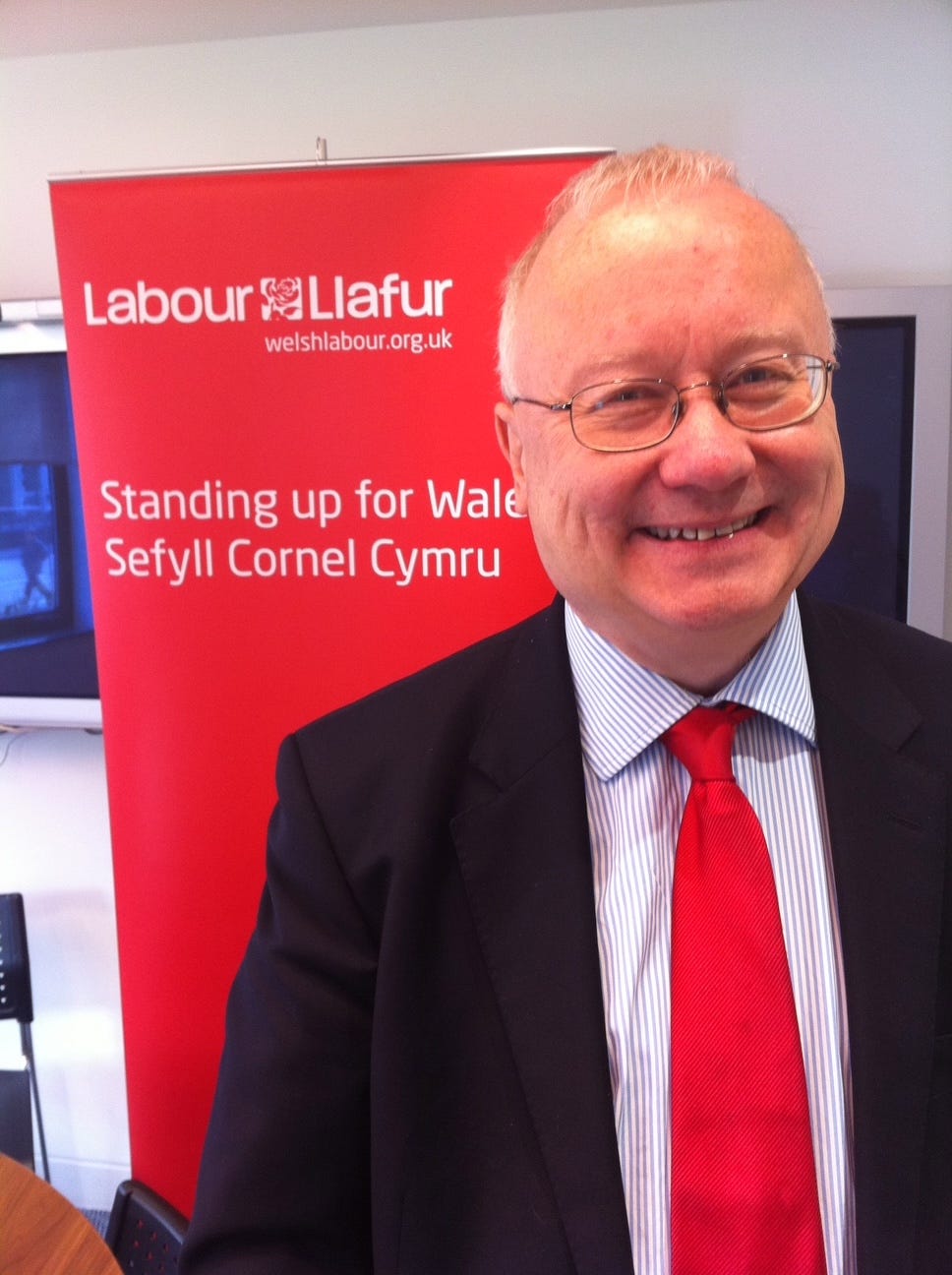
Two weeks ago, I explored the last months of the One Wales Government in 2011. The 2011 Assembly election saw Welsh Labour win 30 of the Assembly’s 60 seats, meaning that we could decide to govern alone. Our campaign slogan was Standing up for Wales, as the picture demonstrates.
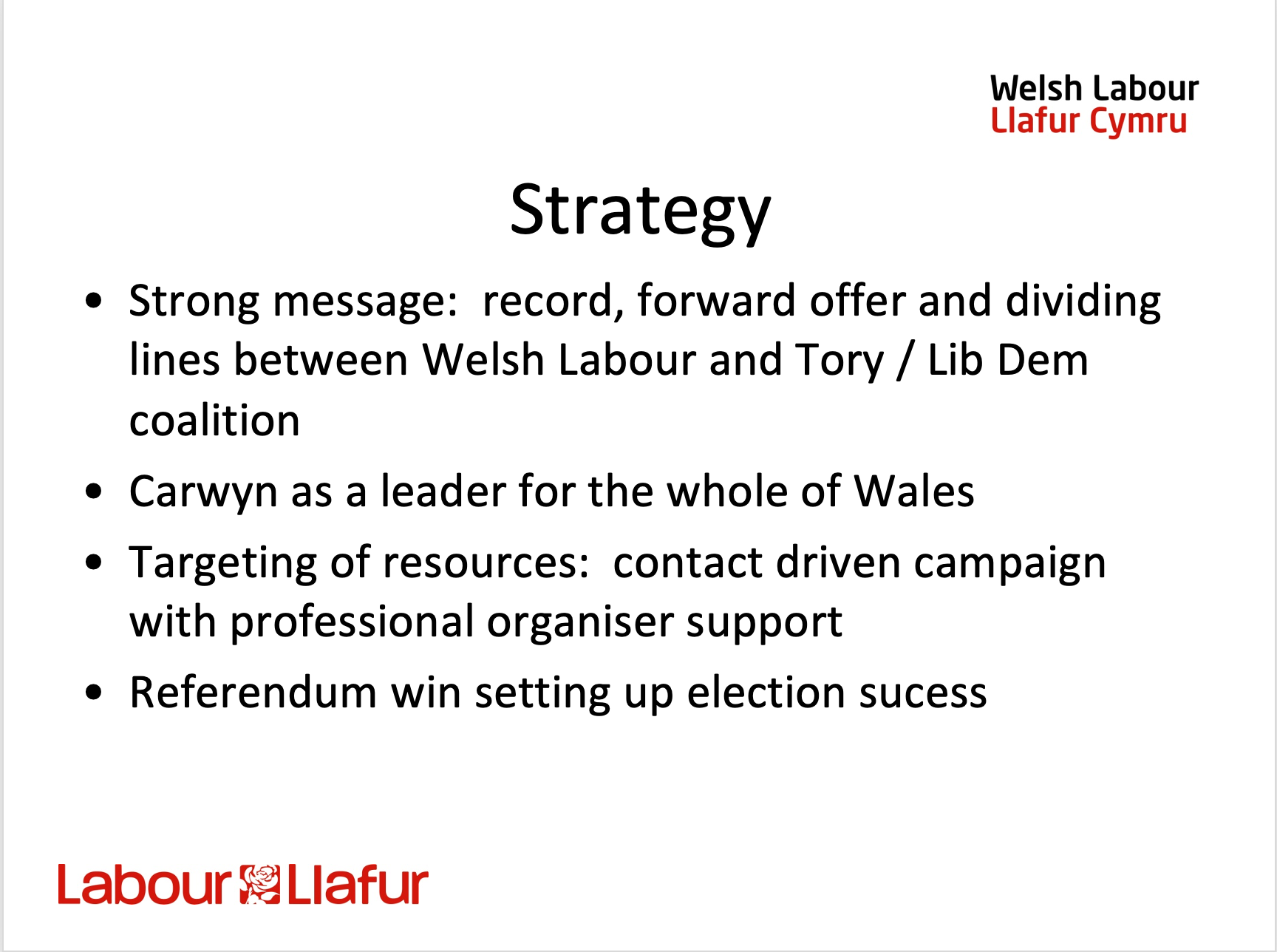
I was Welsh Labour’s campaign director for the election, and for me, it was the culmination of nearly three years of campaigning since Carl Sargeant and I had sat down with Carwyn Jones in 2008 to discuss his potential leadership campaign, after Rhodri Morgan relinquished the role in 2009. One of the messages we developed for that leadership campaign was that Carwyn would be ‘a leader for the whole of Wales’, as he reiterated when he won the election. As I explained in a post three weeks ago, I had presented our campaign plans to Ed Miliband’s Shadow Cabinet in December 2010 so that they were aware of what we intended. In the presentation I explained how we would be running an integrated campaign for both the referendum on law-making powers and the Assembly election campaign. Carwyn as a leader for the whole of Wales would be a key message:
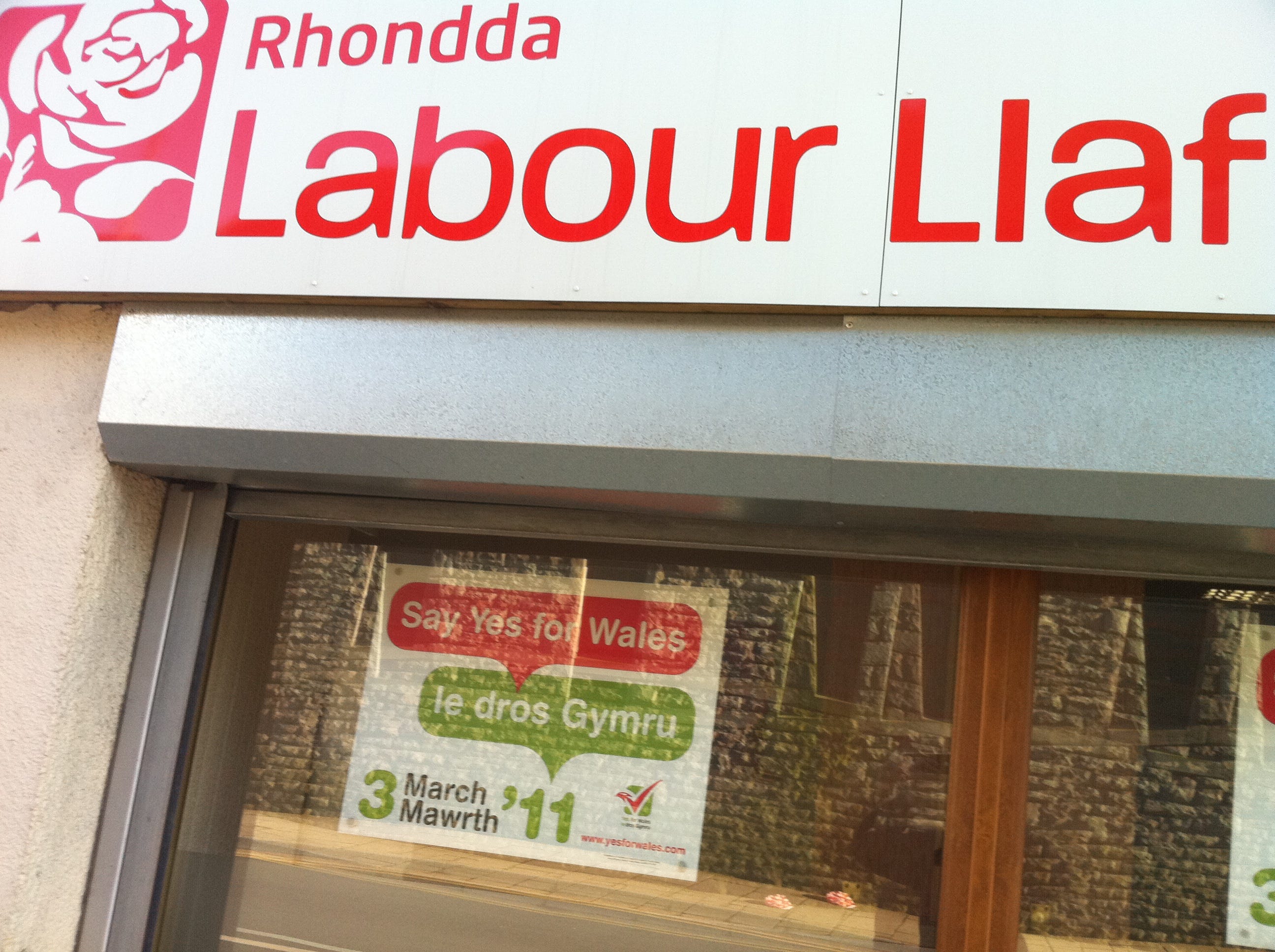
Here’s what the referendum campaign looked like on the ground:
We had begun to develop our plans for the 2011 election campaign much earlier in 2010:
Overview
The campaign for 2011 should start now. It is essential that we assemble a small team, under political direction, to begin planning the campaign.
We are campaigning for a Labour majority administration and to maximize the Labour vote.
The backdrop will be a Conservative/Liberal administration imposing cuts in public services in the current financial year – but an Assembly Government which is continuing to invest in public services this year, to see the recovery through.
The core message is likely to be that only Labour can stand up for Wales in both the Assembly and Westminster, against the Tory-Liberal cuts – and that the best way of guaranteeing this is to give Carwyn a majority in the Assembly.
We will want to demonstrate the change that Labour-led Assembly governments have brought to Wales – new hospitals, schools, surgeries, free buses for pensioners and disabled people, more generous support for students etc.
The election took place on Thursday 5 May. The next day, after all the results were in, we were talking about establishing a ‘Labour-led’ government. Following the Labour Group meeting on 10 May, Carwyn confirmed that we were going to form a Welsh Labour Government, but said that
We will do this without any triumphalism and with no trace of any political tribalism.
We will take the next step - to form a stable Government for our people - with humility and total recognition of the responsibility now facing us.
Carwyn was re-nominated as First Minister, and then began picking his ministerial team.
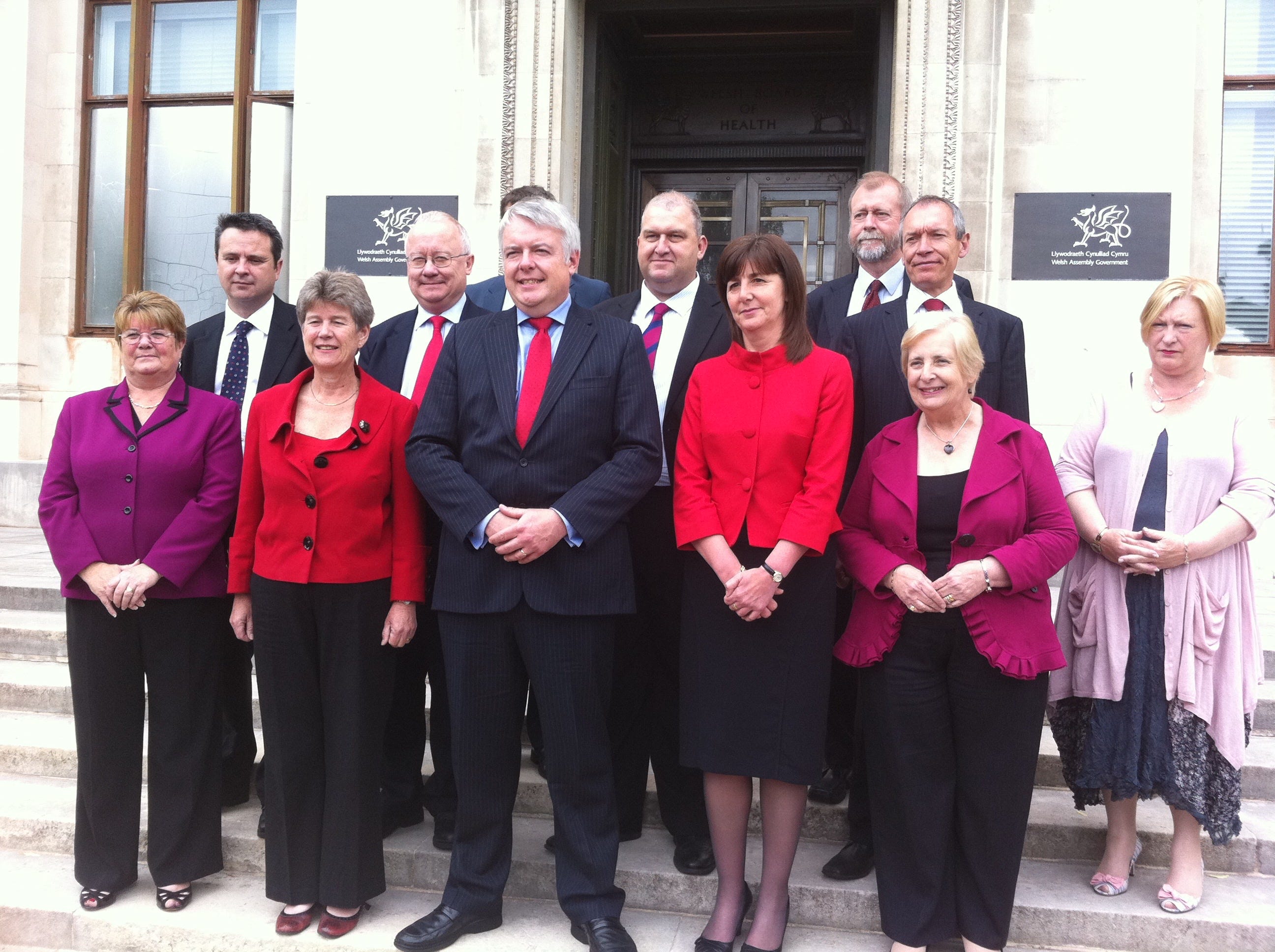
As we were appointed, we were told that we would not be able to go into our ministerial offices until the following Monday, after we had taken the oath and Carwyn had presented his ministers and addressed civil servants from the steps in the Cathays Park building (CP2), a ritual established by Rhodri Morgan. This was odd for me, as I was returning to the Education role, albeit also taking responsibility for the Welsh language.
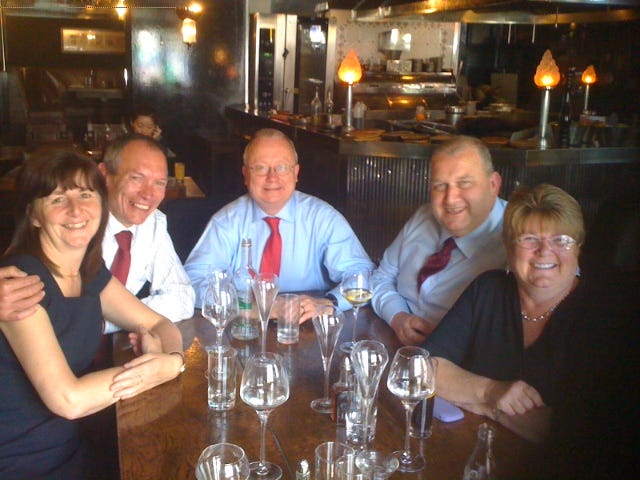
Several of us had arranged to meet up after the Cabinet appointments, which took place in the First Minister’s office in Cathays Park, at the Hilton Hotel for coffee. Since we couldn’t go into our ministerial offices, and the photocall above hadn’t yet happened, we decided to go for lunch. We almost ran into two prominent Welsh Local Government chief executives as we walked through the Hayes to the restaurant. Best avoided as they would want to know what jobs we had and we couldn’t tell them. It was a good lunch though.
The following Monday, 16 May, we took our oaths and Carwyn addressed civil servants. The first meeting of the new Cabinet was held the next day.
It was so much simpler then. It may be more complex this time around. My Cardiff University colleagues Jac Larner and Laura McAllister have written a briefing on what to expect this time, which you can read below:

I think we are in uncharted waters - the truth is that on current polling, Reform would quite possibly be winning first past the post seats in the Valleys and other places in any case. The real issue here for Labour is an extraordinarily unpopular UK Labour government depressing Welsh Labour polling figures to extraordinarily low levels.
I published the entire 2011 manifesto in my last post, which was a huge document, so I don't quite get your comment. There was plenty of policy in it and subsequently new programmes and also legislation. I am simply posting here an edited version - your five paras - of the approach to the 2011 election.